What Should First-Time Buyers Look for in electric cars australia Like the XPENG G6?
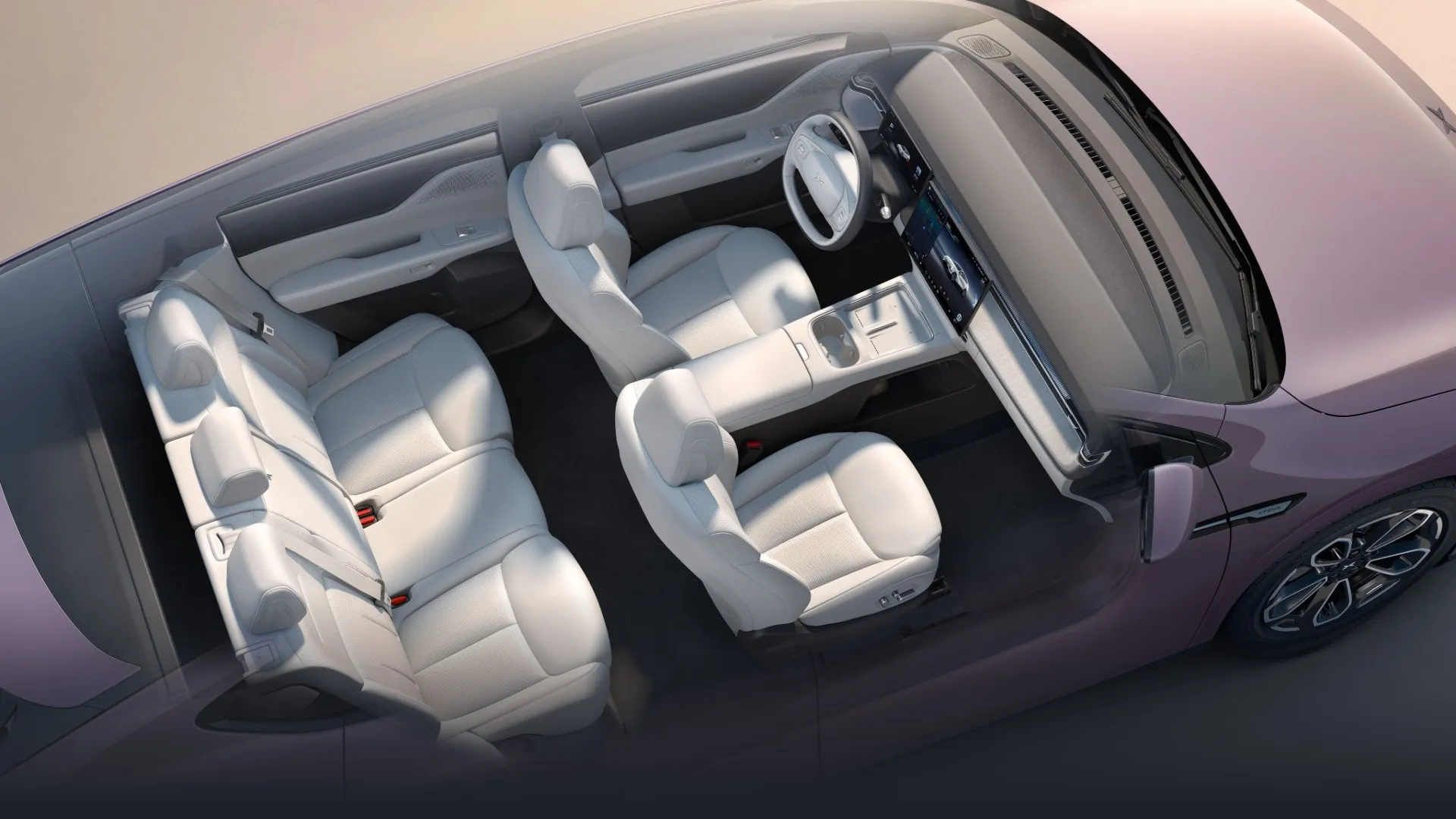
First-time buyers comparing electric cars australia should look beyond the advertised range. The XPENG G6 Long Range combines an 80.8 kWh LFP battery, 525 km WLTP range, 17.9 kWh/100 km consumption, 11 kW AC charging and up to 451 kW DC charging. Its 10–80% charge is listed at 12 minutes under suitable conditions. ANCAP tested the G6 in 2024 and awarded five stars, including 88% for adult occupant protection and 86% for child protection. Buyers should also compare home-charging access, insurance, servicing distance, tyre costs, luggage capacity and real motorway use before choosing a battery or performance version.
Range should be matched to normal travel rather than chosen from the largest number on a brochure. The current G6 Long Range is rated at 525 km WLTP, while the AWD Performance is rated at 510 km; their official energy-use figures are 17.9 and 18.4 kWh/100 km respectively.
A person travelling 15,000 km a year would use about 2,685 kWh at 17.9 kWh/100 km before charging losses. At 18.4 kWh/100 km, the same distance requires around 2,760 kWh, a difference of 75 kWh per year before allowing for temperature, traffic, tyres and charging efficiency.
WLTP is useful for comparing vehicles under a common procedure, but XPENG states that actual range varies with speed, passenger count, load, outside temperature, air-conditioning use, terrain and vehicle condition.
That range calculation leads naturally to charging. A 525 km rated vehicle can still be inconvenient for someone without dependable charging, while a lower-range vehicle may be easy to live with when it starts most mornings near the owner's preferred state of charge.
The G6 accepts up to 11 kW AC charging. XPENG lists about 9.2 hours for a 5–100% AC charge on the 80.8 kWh Long Range and Performance versions, so overnight charging can cover a large battery refill when the electrical supply and wall unit can provide the required output.
| Specification | G6 Long Range | G6 AWD Performance |
|---|---|---|
| Battery | 80.8 kWh LFP | 80.8 kWh LFP |
| WLTP range | 525 km | 510 km |
| Consumption | 17.9 kWh/100 km | 18.4 kWh/100 km |
| AC charging | 11 kW | 11 kW |
| Peak DC charging | 451 kW | 451 kW |
| 10–80% DC time | 12 min | 12 min |
| Power | 218 kW | 358 kW |
| 0–100 km/h | 6.7 sec | 4.13 sec |
Home electrical capacity deserves attention before the car is ordered. An EV supporting 11 kW AC does not make an ordinary socket or every wall charger deliver 11 kW; property supply, charger rating, cable installation and switchboard capacity set the available charging rate.
Apartment residents should confirm parking-bay access, metering arrangements and building approval before purchase. Homeowners should get an installation quote early, particularly if three-phase supply or switchboard work is being considered in 2026.
Public charging needs a different calculation. The G6 Long Range can accept up to 451 kW, and XPENG states that 10–80% can take about 12 minutes when suitable high-power equipment and operating conditions are available.
Peak power should not be treated as the speed delivered throughout a session. Battery temperature, starting state of charge, charger output and thermal management all change the charging curve, while many public chargers have lower maximum outputs than the vehicle itself can accept.
For a road-trip buyer, check the actual CCS2 sites on the route rather than relying on the vehicle's maximum figure. XPENG says its Australian vehicles work with most Type 2 AC and CCS2 DC chargers, and some Tesla Supercharger locations accept non-Tesla CCS2 vehicles.
Safety deserves the same numerical comparison as range. ANCAP tested the G6 under its 2024 protocols and awarded five stars across all applicable Australian variants, with 88% Adult Occupant Protection, 86% Child Occupant Protection, 81% Vulnerable Road User Protection and 80% Safety Assist.
The assessment includes more than passive crash protection. Standard equipment assessed by ANCAP includes autonomous emergency braking for several road-user scenarios, lane-keeping functions, emergency lane keeping, speed assistance and a centre airbag between the front occupants.
ANCAP's published G6 testing included a 50 km/h frontal offset test, a 50 km/h full-width frontal test, a 60 km/h side-impact test and a 32 km/h oblique pole test.
Safety scores should then be followed by a test of the assistance systems in ordinary traffic. During a 30–45 minute drive, try adaptive cruise control, lane support, parking cameras and speed-sign functions rather than spending the whole test on acceleration.
Cabin practicality can be checked with equally simple measurements. The G6 provides 571 litres of luggage capacity with the rear seats upright and 1,374 litres when they are folded, while the Long Range lists a 475 kg payload.
A 475 kg payload can disappear faster than the boot volume suggests. Four 80 kg adults account for 320 kg, leaving about 155 kg for luggage and other carried equipment before the stated payload is reached, so families should consider occupants and cargo together.
The five-seat layout should also be tested with the buyer's own child seat, pram, sports gear or work cases. Published litres do not show whether a wide suitcase clears the hatch opening or whether a rear-facing child seat leaves enough room for a tall front passenger.
Screen size deserves less attention than screen usability. The current specification lists a 10.25-inch instrument display and 15.6-inch central touchscreen, along with Apple CarPlay, Android Auto, connected navigation, voice functions and over-the-air updates.
Spend 10 minutes using the interface while the vehicle is parked. Change cabin temperature, set navigation, connect a phone, find the tyre-pressure display, alter regenerative braking and adjust the assistance settings; repeated menu steps become more noticeable after months of ownership than they are during a short showroom visit.
Warranty coverage should then be compared with where the owner actually lives. XPENG Australia states that privately used vehicles receive a 7-year/unlimited-kilometre whole-vehicle warranty, while the traction battery, battery-management system, motor and Intelligent Power Unit are covered for 8 years or 160,000 km.
Scheduled servicing is required every 12 months or 20,000 km, whichever comes first, and roadside assistance is listed for seven years from first registration. Someone living far from an authorised service location should check travel distance and appointment availability before treating warranty length as sufficient on its own.
Running costs also need to include tyres and insurance rather than electricity alone. At 15,000 km a year and 17.9 kWh/100 km, the Long Range's rated consumption gives about 2,685 kWh of vehicle energy use; applying an illustrative 10% charging loss raises electricity drawn from the supply to roughly 2,954 kWh.
Insurance should be quoted using the exact variant before the deposit is paid. The 358 kW AWD Performance reaches 100 km/h in 4.13 seconds and weighs 2,220 kg, while the 218 kW Long Range takes 6.7 seconds and weighs 2,115 kg, so specification differences extend well beyond acceleration.
Wheel and tyre choice can also change energy use, comfort and replacement cost. Buyers covering 20,000 km or more each year should ask for tyre dimensions and replacement quotes during the same week they compare insurance, because a small annual efficiency difference may cost less than one set of premium large-diameter tyres.
The G6 also lists 6 kW V2L output for the Long Range and Performance versions. V2L can supply compatible external electrical equipment, which may suit camping or mobile work, but buyers should confirm the required adapter and distinguish V2L from home-backup or grid-export systems.
For first-time buyers comparing electric cars australia, a useful showroom check is therefore numerical: record annual kilometres, home charging power, motorway frequency, insurance quote, nearest service location, passenger weight, luggage needs and tyre price beside the vehicle's 525 km WLTP range and 12-minute claimed 10–80% charging time. The purchase can then be compared against actual use rather than one specification.