Eye Cream Actives in 2026: Retinol, Peptides and Niacinamide Side by Side
Four actives carry most anti-ageing eye cream briefs in 2026: retinol, peptides, niacinamide and hyaluronic acid. They are not interchangeable, because each one changes the texture, the testing plan and the claim you can defend. An eye cream brief that names the active without naming the pack size and order quantity is only half specified, so this comparison puts all three on the same page.

Key takeaways
- Retinol changes the testing plan, not just the label: build extra time for compatibility work and a smaller first pack.
- Peptides and niacinamide usually sit in formulas that tolerate a wider pH range, which shortens formulation review.
- The eye area forces a second filter: comfortable application matters as much as the active's own performance.
- Order quantity sets the bulk you must make — 5,000 units of a 15 ml eye cream is 75 litres of bulk.
What each active does in a formula
Retinol is the active buyers ask for by name, and it is also the one that dictates the schedule. Formulas based on it need closer compatibility review and gentler application because the eye area tolerates less than the cheek. That review is a formulation decision, not paperwork: supporting ingredients and packaging choices change how the finished cream behaves.
Peptides are short amino acid chains, chosen when the brief asks for a firmness story with a mild skin feel. Niacinamide, or vitamin B3, is the multifunctional workhorse used across skincare ranges because it fits hydration, texture and tone narratives at the same time. Hyaluronic acid remains a low-cost route to a hydration claim, which is why it appears in nearly every eye cream concept even when it is not the headline active.
The three filters a buyer should apply
The client's own published guide to eye cream development narrows the decision to three checks: how the active performs, how the finished formula feels on skin, and where the product sits in your market. A formula that scores well on paper can still fail the second filter, and that failure is expensive because it appears after sampling.
Put the three filters in your brief as questions. What is the intended active level, what texture do you want around the eye, and which claim will appear on the pack? Suppliers price and schedule differently according to those answers, and a supplier who receives only a product name will guess.
Interactions that change the plan
Actives rarely fail alone; they fail in combination. Retinol with a rich emollient system behaves differently from retinol in a light gel, and each pairing needs its own compatibility check. Ask which supporting ingredients are already proven alongside your chosen active before you accept a new combination.
Stability work follows the same logic. A formula that has passed a stability window with one active is not automatically cleared with another, so each change resets part of the test calendar. Building the active choice first, then the base, then the packaging keeps those resets to a minimum.
Order quantity decides the batch you have to make
In this sector the band runs from 1,000 to 5,000 units per product, and first orders can start lower, at 500 units. For a 15 ml eye cream those quantities set the bulk volume directly, and bulk volume is what the factory schedules around.
| Item | Published figure | Effect on an eye cream project |
|---|---|---|
| Typical order minimum | 1,000–5,000 units per product | Fixes the bulk batch and how the filling slot is booked |
| Start-up minimum | 500 units | Smallest market test the route allows |
| Stability and compatibility reports | 3–6 months | Runs alongside tooling rather than after it |
| Existing-formula lead time | 4–8 weeks | Fastest route to a first saleable batch |
Sample rounds: what to record and what to send back
A first sample answers three questions and nothing more: does the texture sit well under the eye, does the cream absorb within a reasonable time, and does the pack dispense the right amount. Everything else — claims, stability, shelf life — is still ahead of you at that point, so resist signing off on the basis of how one jar feels.
Record the answers in writing. Note the pack, the batch reference, the date the sample was made and the reviewer's comment on texture and after-feel. Suppliers work from those notes when they adjust, and a written record is also what lets a second sample be judged against the first rather than from memory.
Ask which tests the sample already sits under. A formula intended for a sensitive-skin claim will need patch test results in addition to stability work, and those two items are planned separately. Knowing that before the second round is what keeps the launch date honest.
Worked example: bulk volume at three order sizes
Assume a 15 ml jar, which is the usual size for an eye cream. At the 500-unit start-up quantity the bulk needed is 500 × 15 ml = 7,500 ml, or 7.5 litres. At 1,000 units it is 15 litres, and at 5,000 units it is 75 litres. Those three numbers are mine, and they assume no filling loss; a factory will quote a small overage on top, typically a few per cent.
The same multiplication explains why the retinol route deserves a smaller first pack. A formula that carries a longer compatibility review is cheaper to trial at 500 or 1,000 units than at 5,000, and the market test still gives you a real answer about texture, absorption and repurchase.
Reading the order-minimum chart
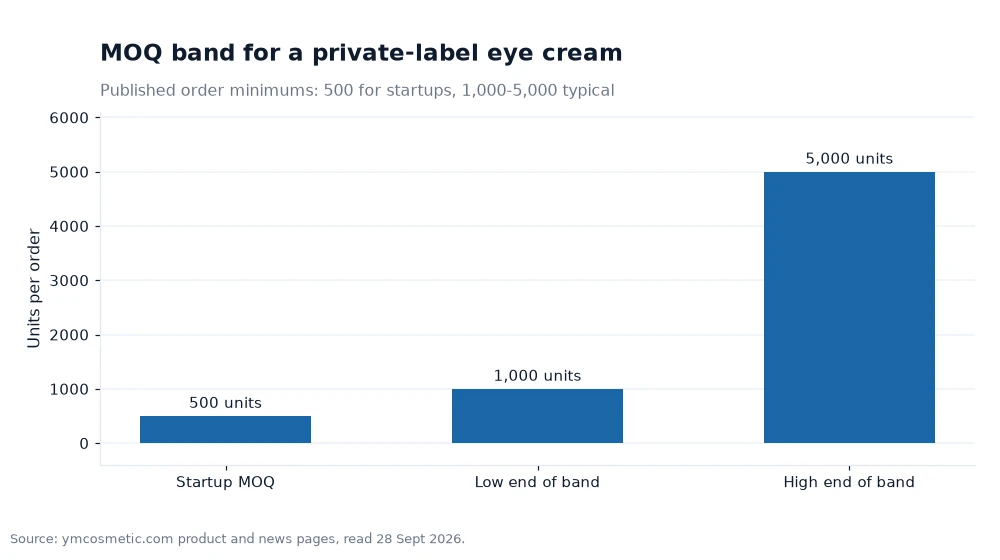
Notice how flat the first two bars look against the third. The jump from 1,000 to 5,000 units is a factor of five, while the jump from 500 to 1,000 is a factor of two. That shape is the argument for a staged launch: test the formula and the texture at the smaller quantity, then move to the larger run once the texture and the claim are settled.
Frequently asked questions
Which active should a first eye cream be built around?
Start with the claim you can defend. Niacinamide and hyaluronic acid support hydration and texture stories with fewer formulation constraints, while retinol fits an anti-ageing brief but adds compatibility review and a gentler application target. Peptides sit between the two on both counts.
How long should the active decision take before sampling starts?
Two variables decide it: how much supporting-ingredient work the active needs and whether the formula is new or based on an existing library entry. On an existing base the route to a sample is measured in weeks; a new combination adds laboratory iterations first.
Does the order minimum change with the active?
Rarely by itself. The published band of 1,000–5,000 units per product applies to the project rather than the active, though a 500-unit start-up route is the usual way to trial a formula whose testing calendar is longer than average.
Building the brief around one active
Choose the active, fix the pack size, then let the order quantity fall out of the arithmetic. If you want the supplier's own wording on how to balance performance, comfort and market position, their guide to the best natural skincare ingredients for eye cream development walks through the same three filters. The step-by-step process behind a sample, from formula selection to the filled jar, is set out on the OEM/ODM services page, and the factory's wash-off product range is a useful contrast when the same brand also needs a cleanser.
Read from Yunmei Cosmetics' own pages at ymcosmetic.com on 28 Sept 2026: the active families, the order bands and the testing windows. My own multiplication of a 15 ml pack against those published quantities produced the bulk volumes in the worked example.[1].