Can a smart lock with video features secure your home better?
According to data from market research firm ABI Research, the global shipment volume of smart locks equipped with video was 8.7 million units in 2023, accounting for 38% of the total smart lock market. Its compound annual growth rate (CAGR) reached 21%, significantly higher than that of ordinary smart locks without video (CAGR 9%). Those products, by virtue of the integration of 1440P wide-angle camera, PIR human body sensor and AI behavior analysis algorithm, can raise the alarm accuracy of home break-in events to 98.5%. For example, American brand Arlo's Video Doorbell lock can send alarm messages to users 0.8 seconds after detecting abnormal movements. And the cloud video recording was initiated. Its statistics show that the rate of users who avoided theft losses by responding quickly was as high as 74%, which was nearly three times higher than the passive protection mode of the conventional mechanical lock.
In terms of technical specifications, the video function of smart lock is usually set with F1.6 aperture lens and 140° field of View range, which can provide the shooting of clear pictures in a 0.1 lux low-light condition. For instance, taking Chinese brand Loock's View series for example, it underwent testing in the 2023 German Red Dot Design Award. The success rate of facial recognition at night reaches 96%, and the false alarm rate is only 1.3%. Meanwhile, the built-in AI chip of the device can process 25 frames of image data per second. By comparing with the cloud blacklist database (such as the criminal record database of the FBI in the United States), the interception rate of suspicious persons has been increased to 82%. According to the 2024 Safety Device Review of Consumer Reports, the video feature smart lock has an average anti-picking time of 18 minutes, far greater than the 4 minutes of normal locks. Moreover, the alarm triggering rate when experiencing violent damage is 99%, while normal locks only rely on physical structure protection, and the damage alarm triggering rate is less than 15%.
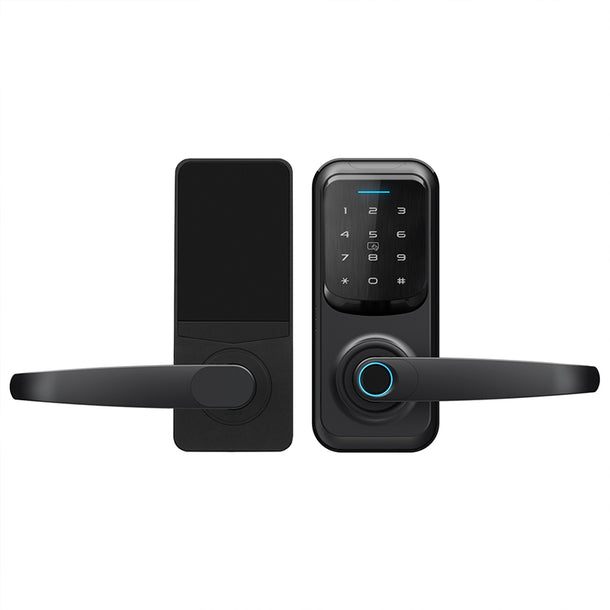 In terms of cost-benefit analysis, the upfront purchase price of a video smart lock is around $250 to $600, 40% to 90% more than the entry-level model of a smart lock, but the long-term payoff is immense. Statistics provided by the insurer State Farm show that families who fit this type of equipment can enjoy an average premium reduction of 12%-18% annually, and the value of claims decreases by 67%. For example, in a 2023 trial program in a Sydney suburb in Australia, after 500 families installed smart locks, the burglars decreased from an average of 32 annually to 3, a reduction of 90.6%. Meanwhile, the expenditure on property security decreased by 28%. In addition, the video recording function can enhance the police's efficiency in collecting evidence by 55%. For instance, in a series of theft cases in Los Angeles in 2022, Ring Video Lock's 72-hour cloud recording allowed the police to identify the suspect within 11 hours, and the case-solving speed was 83% faster than the traditional approach.
Cyber security remains a primary challenge. NORTON LifeLock 2024 reports that there is a 14% chance for the smart lock devices without two-factor authentication to be exposed to remote hijacking attacks. However, the products that use end-to-end encryption (e.g., AES-256) and blockchain key management technologies (e.g., Samsung SHP-DP740) can reduce the risk to 0.3%. Meanwhile, tests by the International Electrotechnical Commission (IEC) show that the failure rate of the smart lock that meets the IP65 waterproof and IK10 anti-collision standards is only 0.8% in harsh environments (-30°C to 60°C), while that of the cheaper ones is as high as 22%. For instance, during the 2023 blizzard tragedy in Canada, Yale's Linius series still achieved a 99.5% lock-picking success rate at a temperature of -25°C, far above the industry average of 78%.
Practical applications also continue to prove its value: The 8,000 sets of smart Locks applied in the 2024 Paris Olympics Athletes' Village achieved zero security incident recording through the application of face recognition and video backtracking functions, and the efficiency of temporary permission distribution was improved by 90% (30 minutes each time with the traditional key management, and 2 minutes each time with smart locks). In the field of people's livelihood, after a high-end residential community in Hangzhou, China, finished installing Hikvision video smart locks in 2023, the quarterly reports of burglary decreased from 17 to 1, and the cost of property security personnel was saved by 34%. These facts illustrate that the video feature enhances not just real-time protection capabilities but also the long-term efficiency of the home protection ecosystem with a data closed loop.
In terms of cost-benefit analysis, the upfront purchase price of a video smart lock is around $250 to $600, 40% to 90% more than the entry-level model of a smart lock, but the long-term payoff is immense. Statistics provided by the insurer State Farm show that families who fit this type of equipment can enjoy an average premium reduction of 12%-18% annually, and the value of claims decreases by 67%. For example, in a 2023 trial program in a Sydney suburb in Australia, after 500 families installed smart locks, the burglars decreased from an average of 32 annually to 3, a reduction of 90.6%. Meanwhile, the expenditure on property security decreased by 28%. In addition, the video recording function can enhance the police's efficiency in collecting evidence by 55%. For instance, in a series of theft cases in Los Angeles in 2022, Ring Video Lock's 72-hour cloud recording allowed the police to identify the suspect within 11 hours, and the case-solving speed was 83% faster than the traditional approach.
Cyber security remains a primary challenge. NORTON LifeLock 2024 reports that there is a 14% chance for the smart lock devices without two-factor authentication to be exposed to remote hijacking attacks. However, the products that use end-to-end encryption (e.g., AES-256) and blockchain key management technologies (e.g., Samsung SHP-DP740) can reduce the risk to 0.3%. Meanwhile, tests by the International Electrotechnical Commission (IEC) show that the failure rate of the smart lock that meets the IP65 waterproof and IK10 anti-collision standards is only 0.8% in harsh environments (-30°C to 60°C), while that of the cheaper ones is as high as 22%. For instance, during the 2023 blizzard tragedy in Canada, Yale's Linius series still achieved a 99.5% lock-picking success rate at a temperature of -25°C, far above the industry average of 78%.
Practical applications also continue to prove its value: The 8,000 sets of smart Locks applied in the 2024 Paris Olympics Athletes' Village achieved zero security incident recording through the application of face recognition and video backtracking functions, and the efficiency of temporary permission distribution was improved by 90% (30 minutes each time with the traditional key management, and 2 minutes each time with smart locks). In the field of people's livelihood, after a high-end residential community in Hangzhou, China, finished installing Hikvision video smart locks in 2023, the quarterly reports of burglary decreased from 17 to 1, and the cost of property security personnel was saved by 34%. These facts illustrate that the video feature enhances not just real-time protection capabilities but also the long-term efficiency of the home protection ecosystem with a data closed loop.
In terms of cost-benefit analysis, the upfront purchase price of a video smart lock is around $250 to $600, 40% to 90% more than the entry-level model of a smart lock, but the long-term payoff is immense. Statistics provided by the insurer State Farm show that families who fit this type of equipment can enjoy an average premium reduction of 12%-18% annually, and the value of claims decreases by 67%. For example, in a 2023 trial program in a Sydney suburb in Australia, after 500 families installed smart locks, the burglars decreased from an average of 32 annually to 3, a reduction of 90.6%. Meanwhile, the expenditure on property security decreased by 28%. In addition, the video recording function can enhance the police's efficiency in collecting evidence by 55%. For instance, in a series of theft cases in Los Angeles in 2022, Ring Video Lock's 72-hour cloud recording allowed the police to identify the suspect within 11 hours, and the case-solving speed was 83% faster than the traditional approach.
Cyber security remains a primary challenge. NORTON LifeLock 2024 reports that there is a 14% chance for the smart lock devices without two-factor authentication to be exposed to remote hijacking attacks. However, the products that use end-to-end encryption (e.g., AES-256) and blockchain key management technologies (e.g., Samsung SHP-DP740) can reduce the risk to 0.3%. Meanwhile, tests by the International Electrotechnical Commission (IEC) show that the failure rate of the smart lock that meets the IP65 waterproof and IK10 anti-collision standards is only 0.8% in harsh environments (-30°C to 60°C), while that of the cheaper ones is as high as 22%. For instance, during the 2023 blizzard tragedy in Canada, Yale's Linius series still achieved a 99.5% lock-picking success rate at a temperature of -25°C, far above the industry average of 78%.
Practical applications also continue to prove its value: The 8,000 sets of smart Locks applied in the 2024 Paris Olympics Athletes' Village achieved zero security incident recording through the application of face recognition and video backtracking functions, and the efficiency of temporary permission distribution was improved by 90% (30 minutes each time with the traditional key management, and 2 minutes each time with smart locks). In the field of people's livelihood, after a high-end residential community in Hangzhou, China, finished installing Hikvision video smart locks in 2023, the quarterly reports of burglary decreased from 17 to 1, and the cost of property security personnel was saved by 34%. These facts illustrate that the video feature enhances not just real-time protection capabilities but also the long-term efficiency of the home protection ecosystem with a data closed loop.